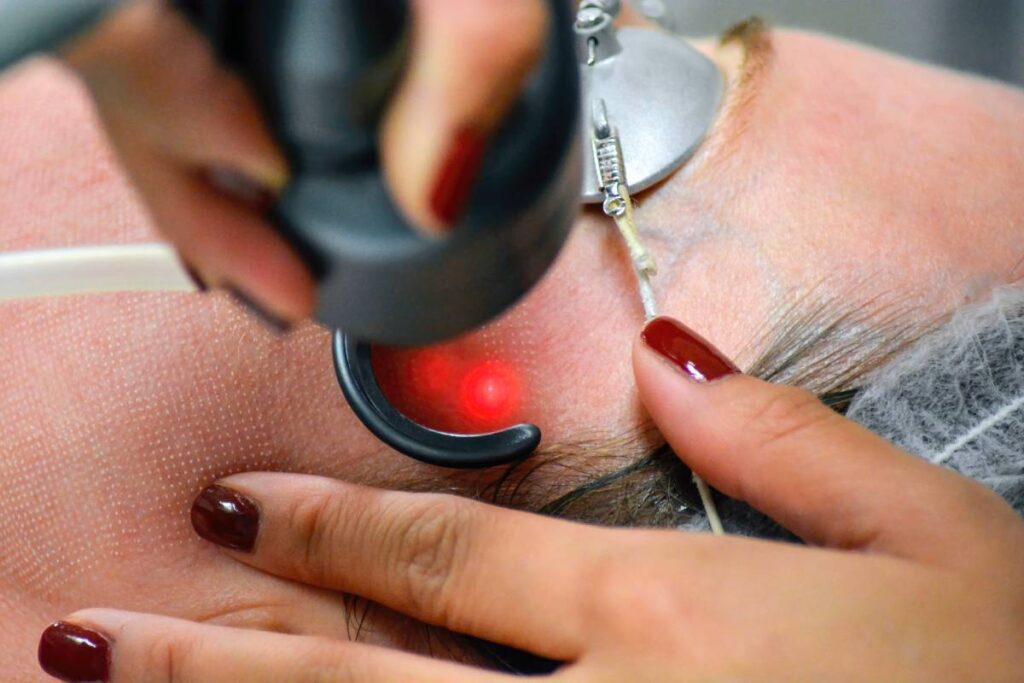
Laser skin resurfacing using fractional technology has become one of the most effective treatment options that many oculoplastic surgery specialists may recommend for aging or damaged skin. This popular procedure reduces wrinkles and scars, evens out skin coloring, and tightens and removes lesions. A specialist uses beams of light to dissolve the outer layers of the skin, encouraging the growth of new collagen fibers. Many patients turn to laser skin resurfacing to rebuild their skin, but don’t understand what is happening at the microscopic level.
What is a Laser Skin Resurfacing?
Before getting into how this technology rebuilds your skin, it is helpful to understand what a laser skin resurfacing is. Laser skin resurfacing is a cosmetic treatment that uses concentrated beams of light to improve skin texture, tone, and overall appearance. The laser works by targeting damaged outer layers of skin while stimulating the deeper layers to produce new collagen and elastin. This controlled process encourages skin renewal, resulting in smoother, firmer, and more evenly toned skin over time.
Instead of treating your entire face at once, the laser creates thousands of microscopic dots in a pattern. Each tiny controlled injury, about as thin as a single hair, signals your body to respond by sending cells to rebuild fresh, new skin. The untreated areas remain healthy and help the treated areas heal faster.
How It Works
The fractional laser creates injuries to your skin, triggering a repair response by sending special cells called fibroblasts to each microscopic tear. These cells are responsible for the construction of collagen and elastin. Collagen gives your skin strength and firmness, while elastin helps it stretch and bounce back. It takes several weeks to replace damaged tissue with fresh, strong skin. This procedure uses your body’s natural healing process to create smoother, tighter, and younger-looking skin.
The Healing Process
The initial phase typically lasts a few days and is marked by redness, swelling, and a burning sensation. It is important not to pick or scratch any crusty skin, as this can result in scarring or infection.
Days five to seven following your laser resurfacing, your skin will dry out and begin to peel. The new skin underneath will be pink but will lighten over the next two to three months. Your body will continue to build new collagen over the next few months, creating smoother, firmer, and more evenly toned skin.
Benefits and Risks
Laser skin resurfacing is an impressive alternative to more invasive procedures and older treatments. The treatment effectively smooths wrinkles, fades scars, reduces red spots, and tightens loose skin. As your body builds collagen, your skin will show noticeable improvement over several months.
This cosmetic procedure offers many benefits but still carries risks. Many patients experience redness, swelling, and peeling for several days. Some patients report temporary darkening or lightening in treated areas, especially in those with darker skin tones. Less common risks include infection, prolonged redness, or scarring. This is especially true when aftercare instructions aren’t followed.
Rebuilding Skin with Fractional Laser Technology
Laser skin resurfacing leverages your body’s natural healing process by creating thousands of tiny, controlled injuries in targeted areas. This signals your body to repair itself by producing new collagen and elastin, resulting in healthier, more youthful skin. Results from this treatment are gradual, meaning improvements aren’t as immediate as other cosmetic enhancements. However, this technique is natural-looking, less invasive, and has minimal downtime. If you are interested in laser resurfacing, it is highly beneficial to seek a qualified oculoplastic surgeon or dermatologist. They will help you determine the best path for you to get the results you want.
Always consult a skilled professional for any laser treatment. Schedule a consultation to see is laser skin resurfacing is right for you!