Eyelid Surgery (Blepharoplasty)

Your eyelids may contribute more to your appearance than you are aware. Often, aging around the eyelids can lead to looking more aged or tired than you even remotely feel. At my practice in Rosedale, I (Dr. Gandhi) provide rejuvenating blepharoplasty for patients from across the Baltimore region and the state of Maryland. As a leading eyelid surgeon in the area, I ensure every procedure begins with the patient and ends with stunning results.
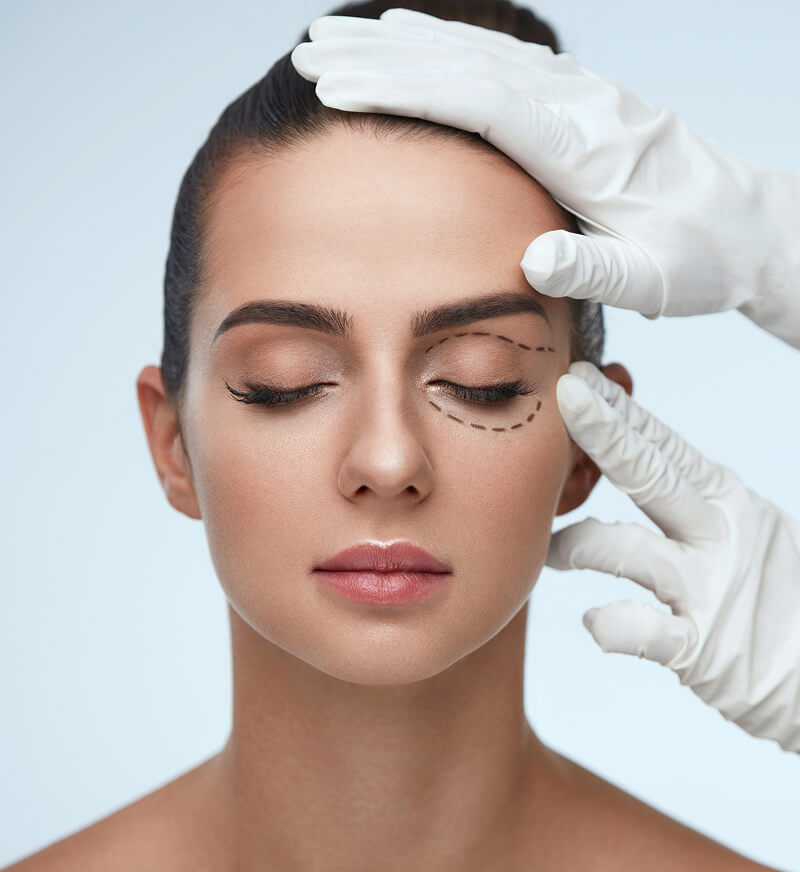
A woman with closed eyes, calm expression, marked with dotted lines under her eyes. Gloved hands gently touch her face, suggesting cosmetic procedure planning.

What Is Blepharoplasty?

Eyelid surgery, also known as blepharoplasty or an eyelid lift, can rejuvenate puffy, sagging, or tired-looking eyes by removing excess fat and skin from the upper or lower eyelids. The procedure can also tighten eyelid muscles and tissue. Patients of a range of ages can benefit from the procedure, rejuvenating their appearance with long-lasting results. I work personally with each candidate to ensure their plan meets each of their cosmetic goals.
Solutions for every eyelid concern.

Types of Eyelid Surgery

Upper
Blepharoplasty

Upper blepharoplasty focuses on removing excess skin and fat from the upper eyelids. Opens the eye and restores a more youthful, alert expression. My approach involves subtle changes that maximize results, avoiding an “overdone” look.

Lower
Blepharoplasty

Targets the under-eye area, removing bags, dark circles, and wrinkles. Helps create a more rested look and can restore volume lost due to aging. Small under-eye changes can dramatically influence your overall facial appearance.

Quad
Blepharoplasty

Combines upper and lower blepharoplasty into a single procedure. You still need only one surgical visit but can see the benefits of two. I design each procedure to be complementary, so the results build on each other while staying natural looking.

Blepharoplasty FAQs

Who is a good candidate for a blepharoplasty?

The best candidate for a blepharoplasty has a few key characteristics. These include someone who:

  • Is in good overall health
  • Does not smoke
  • Does not have serious eye conditions
  • Has healthy facial tissue and muscle

A person with eye disease, diabetes, thyroid disorder, cardiovascular disease or high blood pressure may not be a good candidate for a blepharoplasty.

It is important for a patient to have realistic expectations before undergoing a blepharoplasty. Although it can enhance appearance and improve self-confidence, it does not radically alter the look of the face.
  • Anesthesia: The first step is to numb the treatment area. Usually, only local anesthetic is sufficient to ensure you feel no pain during the surgery.
  • Incisions: In upper blepharoplasty, the incision is hidden along the natural crease of the upper eyelid. With lower blepharoplasty, it is typically hidden within the eyelid.
  • Adjustments: Depending on your plan, I will complete a combination of a few changes. These can include removing excess skin, repositioning fat, and other techniques.
  • Finishing: I check my work multiple times before closing the incisions. Then, you can rest for a while. Once ready, you can return home with someone to drive you.

After blepharoplasty, patients may be advised to apply lubricating drops/ointment and cold compresses to aid in healing and minimize side effects. I provide full consulting on steps to follow when recovering, fostering a smooth healing process. Some key points that highlight the process include:

  • Most patients return to work within a few days to a week, but should avoid exercise and strenuous activities for at least 2 weeks.
  • Stitches are usually removed 3 or 4 days after the procedure.
  • Most of the swelling and other side effects typically subside within 2 weeks.
  • Contact lenses and eye makeup may not be worn for 2 weeks after surgery.
  • Patients are typically advised to wear dark sunglasses outside or in bright light for 2 weeks to protect their eyes from the sun and wind.
Although there may be swelling and bruising around the surgical site, they will subside on their own, and the eyelids will improve in appearance for up to a year. Although the eyelids are still subject to aging, blepharoplasty produces long-lasting results. Upper eyelid results can last for 5-7+ years. Lower eyelid results often last even longer, with benefits for 10+ years for many patients.
The scars from a blepharoplasty are well concealed and usually fade with time until they are virtually undetectable. With lower blepharoplasty, the scar is often entirely hidden. Having a smooth recovery is essential for minimal scar formation. So we recommend closely following all your post-procedure instructions.
Each procedure is personalized to the patient. The price can vary significantly, so we provide an individualized quote after each consultation. Generally, upper blepharoplasty can cost between $4,000 and $6,000. Lower blepharoplasty tends to be between $4,500 and $8,000. For combined procedures, the costs will depend on their complexity.
It depends on the cause of the drooping. I provide a full exam before any procedure, ensuring that the chosen procedure is your ideal one. If you have ptosis (drooping caused by eyelid muscle weakness), you may need a distinct approach. For drooping caused by excess skin, upper blepharoplasty is your best solution.
Absolutely! Firstly, you can combine both eyelid procedures. By addressing both upper and lower eyelid concerns, you can achieve balanced results. Patients can also combine eyelid surgery with a brow lift, which smooths the forehead area. Additionally, I often recommend nonsurgical procedures for touchups. For example, having routine laser treatments can help prolong your surgical results. Properly done, you can avoid needing to repeat your procedure.

Schedule Your Consultation

Call my office or use the online form to schedule your consultation for a brow lift today! I provide premier care to patients from the Baltimore, Maryland area and beyond at my practice in Rosedale.